Philip "Finny" Francis Cassidy
Vital Statistics
The Teacher's Son
Philip Francis Cassidy was born on 16 March 1900 in Carracastle, a small townland in the heart of east Mayo. Both his parents—John Cassidy and Annie Doherty—were National Teachers, a rare distinction that placed the family in a professional class well above the tenant farmers and labourers of rural Ireland. His childhood was spent at "Gleann House" in Charlestown, the family home name that would persist through his generation.
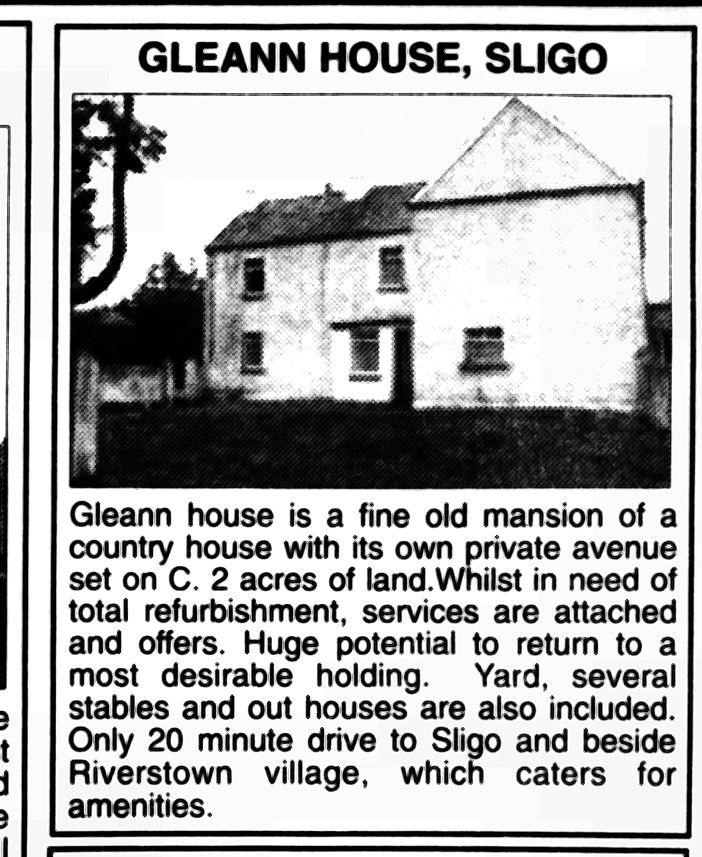
The 1901 Census recorded him as a one-year-old in the household at Cashelduff (House 47, Cloonmore DED), where his father John worked as a National Teacher. By 1911, the family had moved to Glenmullynaha West (House 39, Kilbeagh DED), and Philip, now eleven years old and listed as a Scholar, was one of nine children in a thriving household that included two National Teachers as parents—a remarkable achievement for any Irish family at the turn of the 20th century.
One of his older brothers, John Jr., would follow their father into the teaching profession and marry Mary Gallagher of Swinford in 1928. That union produced a son, Joseph Cassidy, who would become Archbishop of Tuam (1987–2007)—making Philip the great-uncle of one of Ireland's most prominent clerics.
John Cassidy wasn't just a teacher in a schoolhouse — he was part of a national movement. In the early 1900s, Ireland's education system was undergoing rapid transformation, and National Teachers were organizing to demand better salaries, improved school conditions, and recognition for the Irish language in the curriculum. John was among those who showed up.
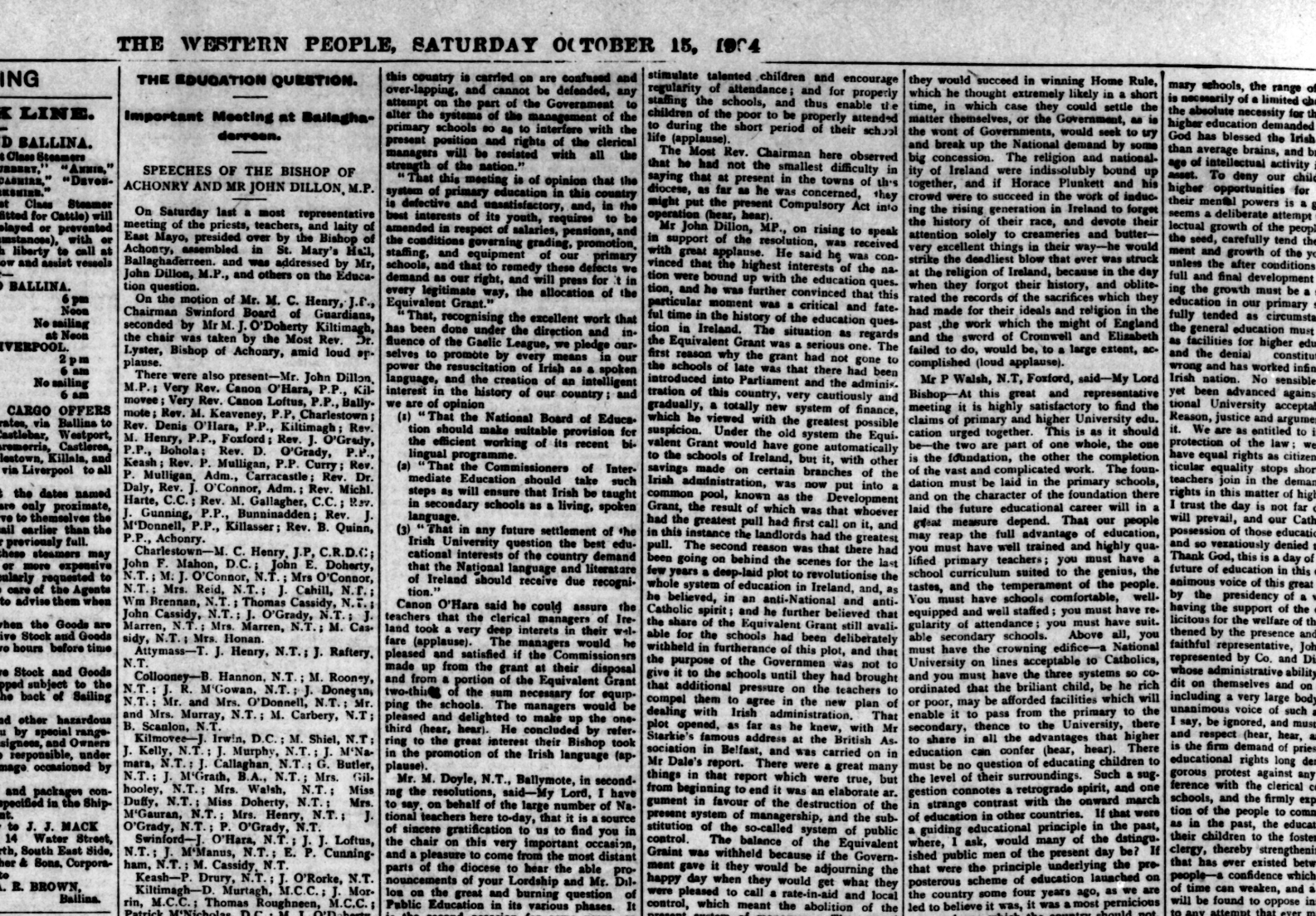
In October 1904, a gathering of priests, teachers, and laity of East Mayo assembled at St. Mary's Hall, Ballaghaderreen, presided over by the Bishop of Achonry, to address what the press called "The Education Question." John Cassidy, N.T., appeared among the Charlestown delegation alongside other teachers and local leaders. The meeting passed resolutions demanding better funding, support for bilingual education, and recognition of the Irish language — all under the watchful eye of John Dillon, M.P., who delivered a speech on the politics of the Equivalent Grant.
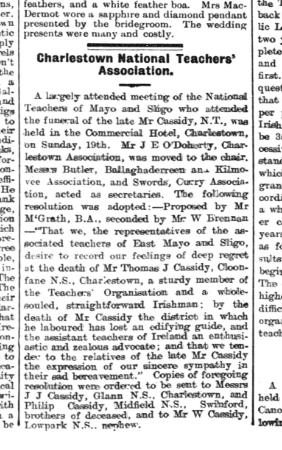
Three years later, in 1907, John appeared again — this time at a National Teachers' Association meeting reported in the Sligo Champion. These were not casual events. The NTA was the professional body fighting for teachers' rights at a time when national schools were chronically underfunded and teachers were poorly paid relative to their education. John and Annie Doherty — both National Teachers in the same household — were raising nine children on those wages while advocating for reform.
This was the world Philip grew up in: a household where education was both a profession and a cause, where newspapers covered your father's public meetings, and where the future of Ireland's schools was debated at the kitchen table.
Birmingham & the Film Industry
Sometime between 1915 and 1920, Philip left Ireland for England. Like all Irish emigrants moving to Britain during this period, there were no passenger records or immigration controls—Ireland remained part of the United Kingdom, and crossing the Irish Sea was domestic travel requiring only a ticket.
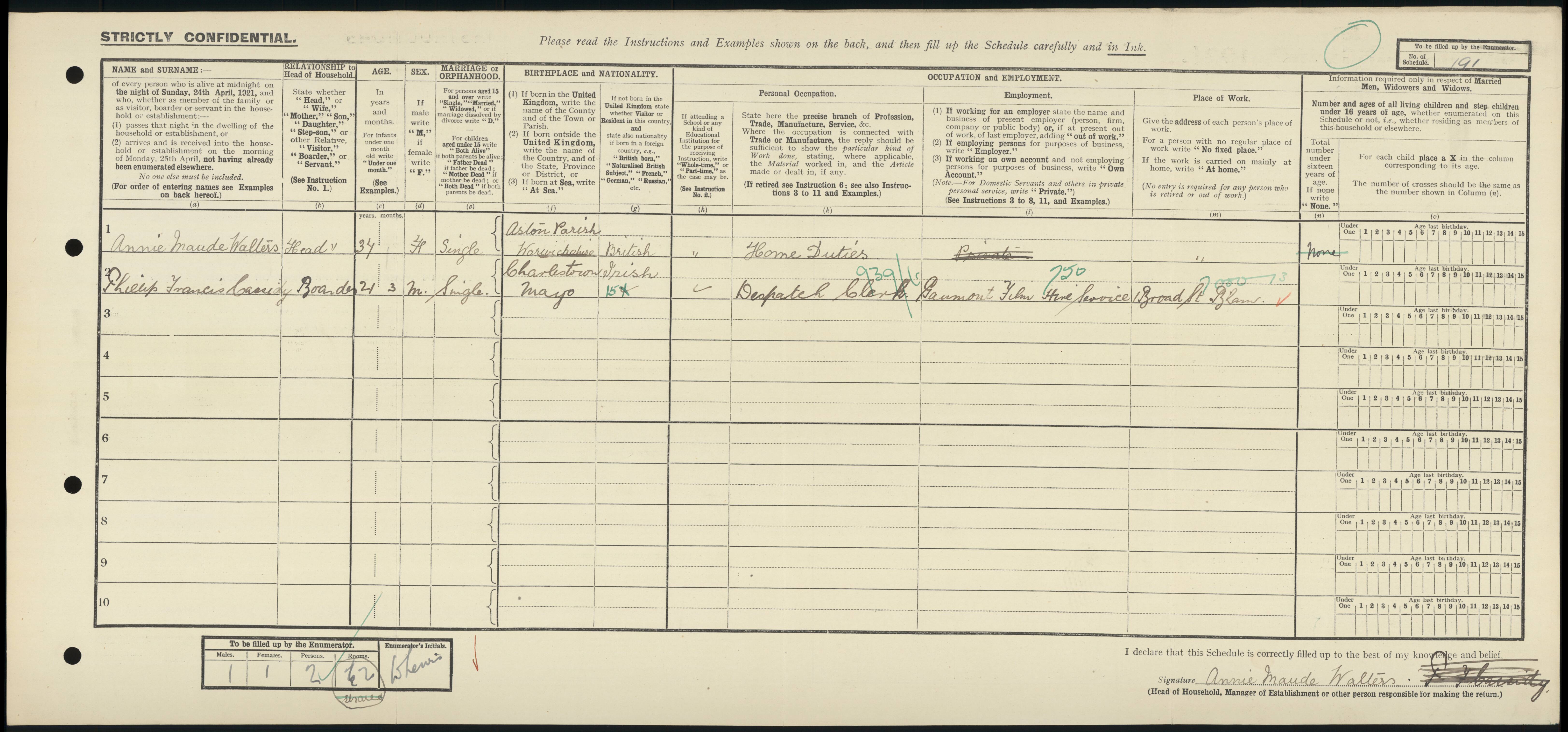
On 19 June 1921, Philip appeared in the 1921 Census of England and Wales as a boarder at 46 Queen's Road, Erdington, Birmingham. He was twenty-one years old, single, and listed his occupation as Despatch Clerk at Gaumont Film Hire Service, located at 1 Broad Street, Birmingham. He lived in lodgings with Annie Maude Walters, a thirty-seven-year-old widow. His nationality was recorded as "Irish."
The Gaumont Film Hire Service was part of Gaumont British Picture Corporation, a major film distribution company of the era. Philip's role as a despatch clerk would have involved coordinating the movement of film reels to cinemas across the Midlands—reliable, steady work in a modern industry. For a young man from rural Mayo, the Birmingham of 1921 was a world away: industrial, urban, and full of opportunity.
Crossing the Atlantic
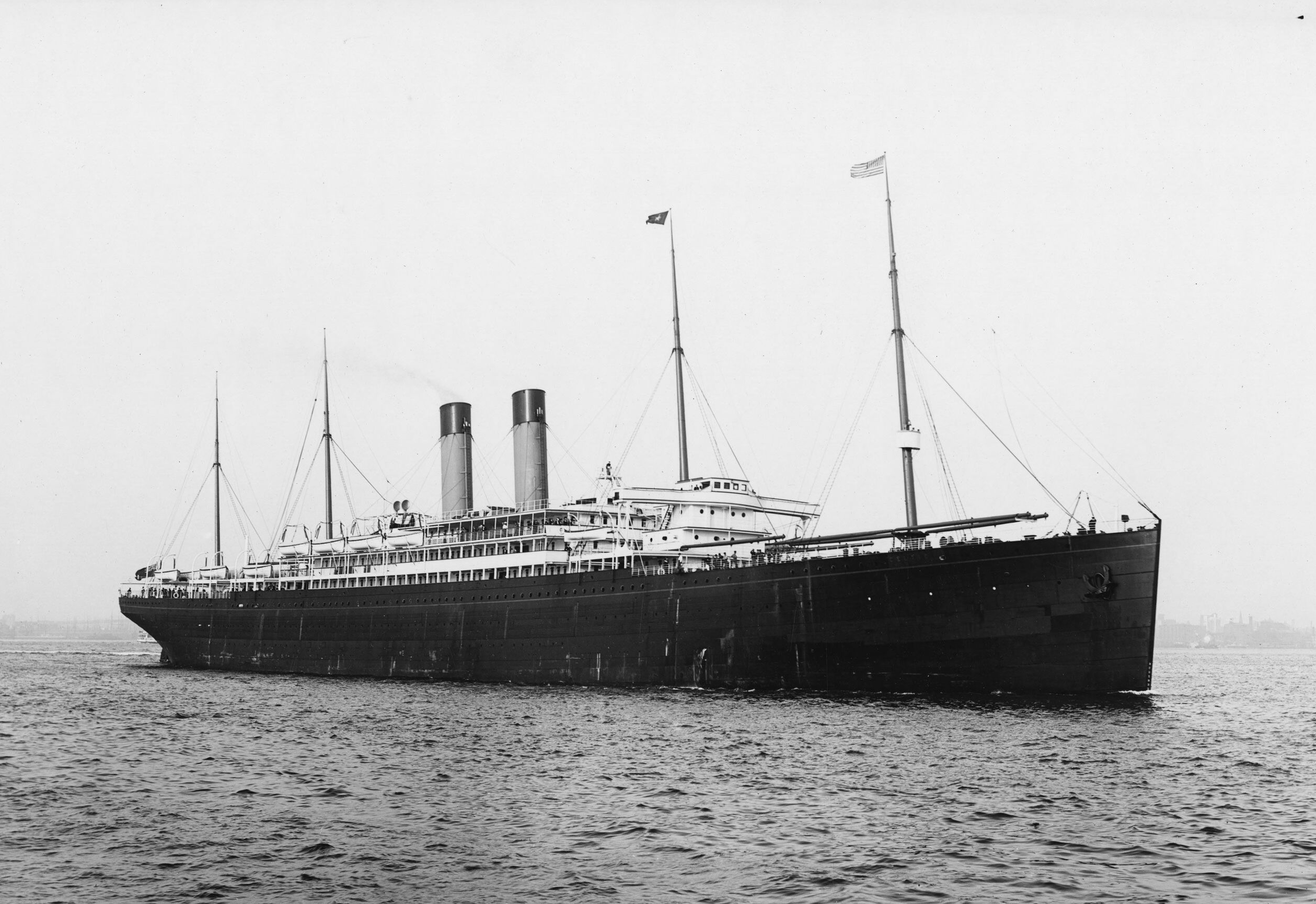
In the spring of 1925, Philip made the decision to emigrate to the United States. On 10 March 1925, he boarded the SS Celtic, a White Star Line vessel bound for New York, departing from Liverpool. He was twenty-four years old.
The manifest recorded his arrival at Ellis Island the same day. Like many Irish emigrants who had traveled through England, Philip was listed with "Gt Britn" (Great Britain) as his birthplace and origin country—a detail that would distinguish him from Irish emigrants who sailed directly from Irish ports. He had spent nearly five years in Birmingham, and that recent history shaped how his arrival was recorded.
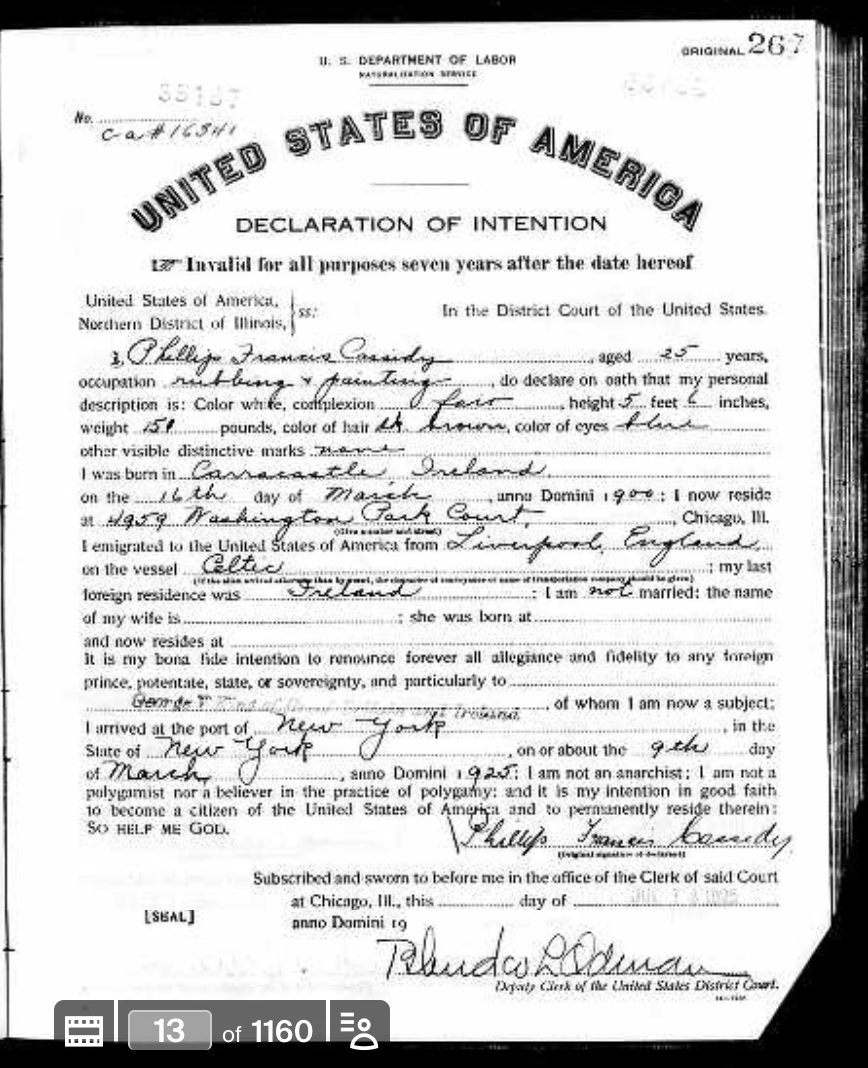
Just four months after arriving in America, on 14 July 1925, Philip filed his first Declaration of Intention in Chicago—the formal first step toward U.S. citizenship. But he did not remain in Chicago. The pull of the Ohio Valley, where Irish communities were already well-established, drew him southward.
A New Life in America
Philip's journey took him from Chicago to Cincinnati to Toledo—a path that traced the contours of Irish-American settlement in the Midwest. And in Cincinnati, he found love.
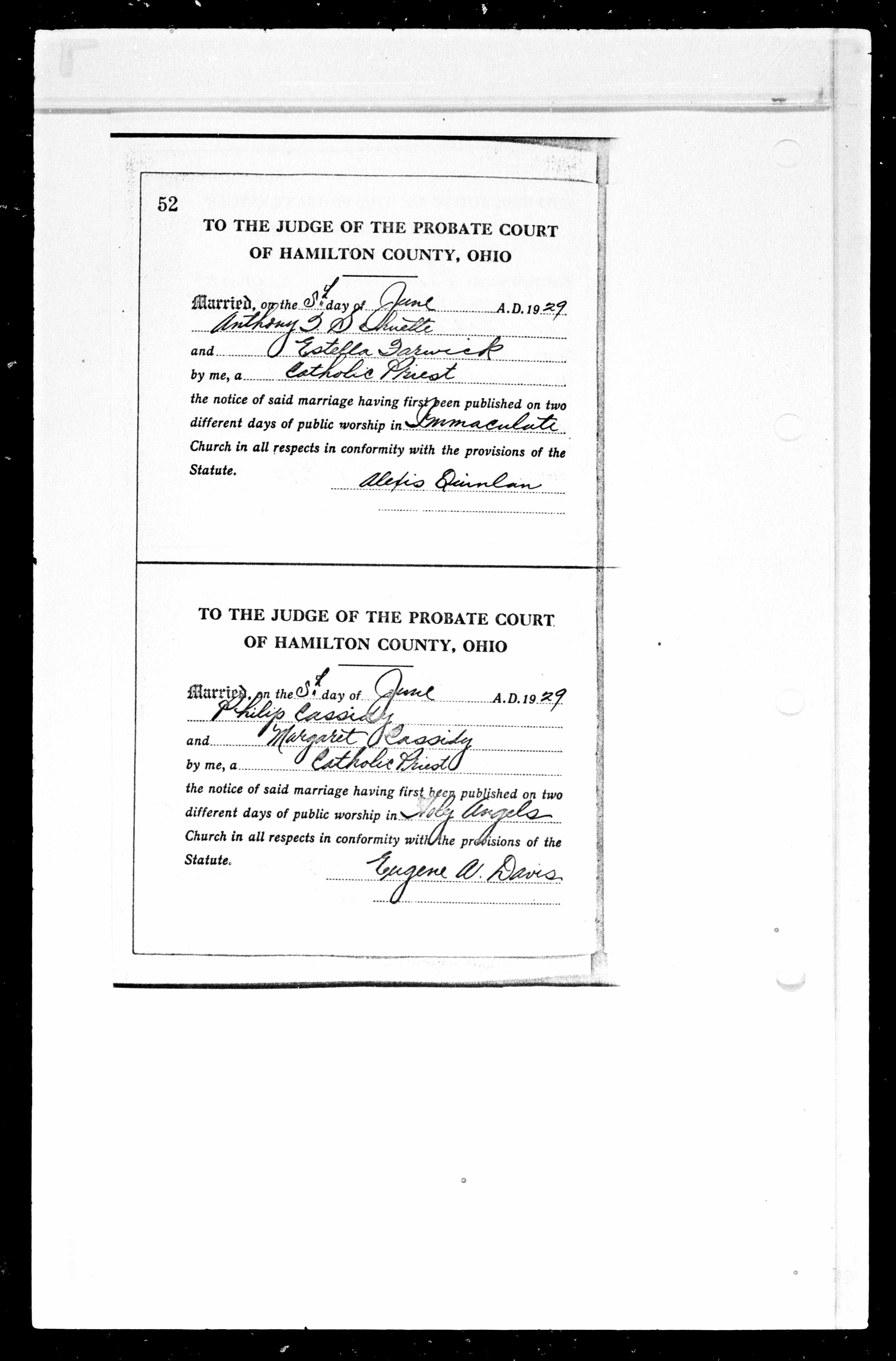
On 5 June 1929, Philip married Margaret Mary "Peggy" Cassidy in Cincinnati. Peggy was also from east Mayo—she had been born on 26 July 1900 in Bulkane, just a few miles from where Philip grew up. Both had left Ireland within months of each other in 1925: Philip on the SS Celtic in March, Peggy on the SS Cedric in May. They were products of the same Irish townlands, carriers of the same dialect and customs, and they found each other in America's heartland.
The following year, on 21 May 1930, their daughter Mary Theresa was born in Toledo, Ohio. By 1935, Philip was working as a Foundry Worker at 1520 Boo[?] Street in Toledo—heavy industrial work in a metal foundry, a common occupation for Irish immigrants of his generation. His address changed, his occupation changed, but his trajectory remained steady.
On 18 March 1935, Philip was naturalized as a U.S. citizen in Lucas County, Ohio. Certificate No. 4479 marked the formal completion of his journey from Carracastle to America. The naturalization record captured his physical description at age thirty-five: 5'6" tall, 145 pounds, dark brown hair, blue eyes, and fair complexion. Nationality was listed as "British," reflecting his time in England. Race was listed as "Irish."
Philip died in 1943, at the age of just forty-three. His daughter Mary Theresa, born in Toledo in 1930, survived him and carried forward the Cassidy name into the second generation of Irish-Americans. Her descendants—including Meghan—continue the family's story today.